


Asbestos in Certified Topsoil is Criminal
Geoenvironmental • Industry matters • Regulation
Ground & Water Director Fran Williams asks: “How on earth do loose asbestos fibres get into imported, manufactured BS3882 Approved Topsoil?”
 To me its almost criminal, how an ‘apparently quality’ certificated soil, used as the dressing for private gardens (the part of a development which the end-users are most exposed to) can have traces of asbestos fibres in it.
How does it happen and how often does this occur?
We will look at possible causes in a minute, but I can tell you that Ground & Water must encounter this problem on 1-2 sites a year. And we can’t be the only geoenvironmental consultants who do; so across the UK that’s a significant number of sites.
Also, in our experience it doesn’t seem to be an issue with one supplier, developer or groundwork contractor either. Something is slipping through the net!
 The potential causes
The Environment Agency has guidance on the use of manufactured topsoil. This is because it is made from waste or put more politely: ‘site won and/or imported soils and organic ameliorants’.
We believe the problem could be arising because of one (or more) of the following:
- Given the inorganic component could come from Made Ground, is there enough testing/due diligence done by the manufacturer on the base materials before they are processed?
- We question whether there is an absence of asbestos fibre screening as part of the certification to BS3882 of the end product Topsoil
- The testing of manufactured Topsoil is not undertaken with sufficiently frequency at the plant
- Historic certificates are passed off as other materials. (Quite often we see certificates that are 6 – 9 months old and there is no way of knowing whether the material imported relates in any way to the certificate)
- The Topsoil becomes contaminated during storage or transportation
- There isn’t enough time to test a sample of the material onsite, before it is used.
If there are any Topsoil manufacturers/suppliers who would like to meet to discuss these issues, I would be very accommodating with my diary. This is because I would love to get to the bottom of why we find manufactured Topsoil contaminated with asbestos fibres!
Relax and breath…!
Now I must be realistic here… Most of the identifications in samples we have analysed are microscopic and have an Asbestos Quantification of less than the detection limit (<0.001%). They are also generally of the White Chrysotile variety, so have a lower long-term cancer risk.
Therefore, an Asbestos in Soil Risk Assessment would likely suggest that there is no excess Lung Cancer or Mesothelioma risk, or that the risk of such health issues arising would be at a likely publicly perceivable acceptable risk of less than 1 per 100,000 people.
However, the publicly acceptable levels are not always the case and we have noted microscopic AIB and Amosite fibres, which do pose a risk.
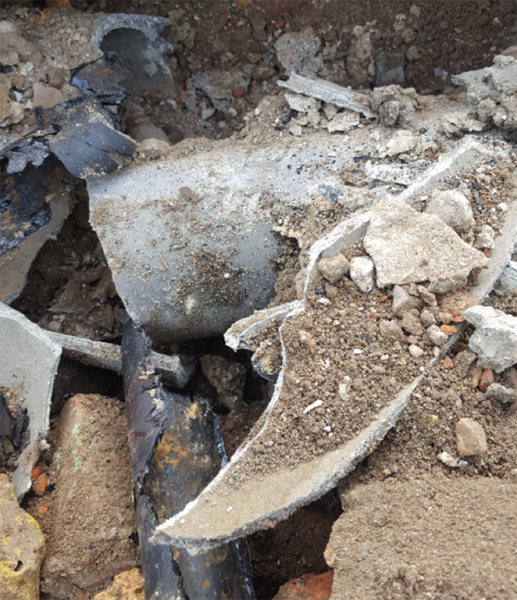 Any asbestos is unacceptable
The question must arise whether such a risk, however small, needs to be accepted by home-owners?
The construction industry must have a duty of care to ensure it produces and supplies such an important soil without such contaminants; because long term, we do not want the blight of the asbestos industrial legacy, to be associated with our new build houses and the families who purchase and live in them.
Currently the only solution to this is Good Developer Due Diligence. Make sure the materials you import are of good quality and from a reputable source before its too late.
Ground & Water’s Topsoil Verification Checklist provides an overview of this for you, so you can make site by site decisions. It’s detailed, perhaps onerous, but so is having to dig out gardens due to the presence of asbestos, which delays hand over and has a negative public image. Send me an e-mail to: francis.williams@groundandwater.co.uk and I will forward it to you free of charge.
But I refer back to my previous comments. It must be the responsibility of the Topsoil manufacturers to supply Topsoil that is 100% free from asbestos.