

Cretaceous Period pondering delivers big win for Dorset development
18th October 2022
Geotechnical • Specialist Services
How using Construction Industry Research and Information Association (CIRIA) chalk guidance to the max, delivered a sound solution for Ground & Water’s client.
Our Client
Preliminary-Assessment
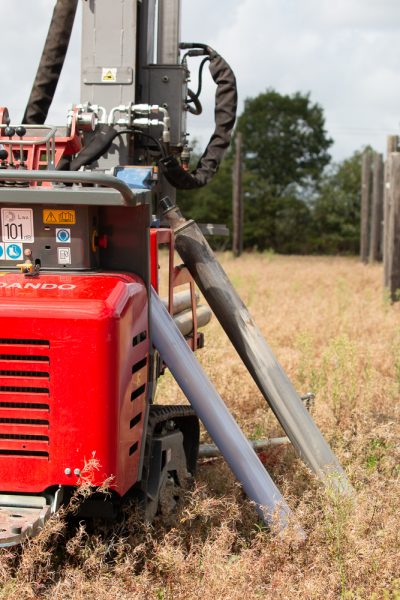 Based on an overview of the original reports, it appeared to Ground & Water that the chalk across the site was either weathered clast dominated material or structured. The trouble was that the initial method of investigation, Windowless Sampling, had meant that the chalk was being recovered as structureless matrix or clast dominated, underestimating the geotechnical properties present. Initial review also indicated that the density of the chalk was paired with its structure, strangely that the weathered clast dominated chalk was medium density and the more structured, low density.
Our Challenge
The residential development site comprised a former brewery, which was being redeveloped into residential houses and flats. Previous geotechnical advice, provided by others, indicated that the chalk was varied (matrix to clast dominated, locally structured), low to medium density, with a bearing capacity of between 126 – 190kpa. The issue was that this was not suitable for the high line loads being indicated by the Structural Engineers and that piling was required.
The Ground & Water Approach
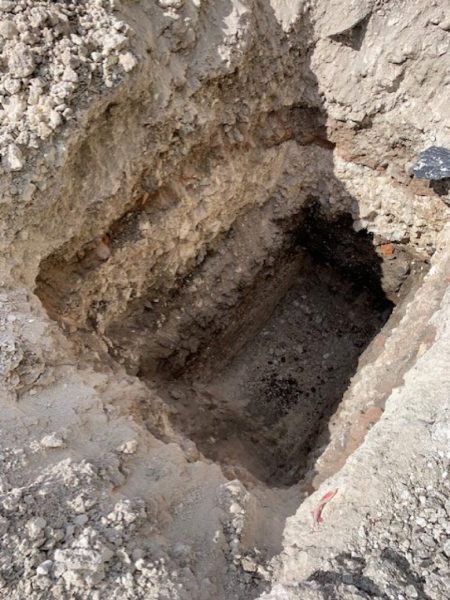
Intrusive investigation comprising additional number of shallow trial pits was undertaken across the site to further prove geology and to take bulk disturbed samples for geotechnical testing of the chalk (BS standard chalk density tests). The testing targeted where high line loads were anticipated.
The Outcome
Based on laboratory testing results, detailed logging of the chalk, and a review of this literature, it was possible to increase the bearing capacity of the soil to 225kpa and 400kpa in areas of low to medium density chalk. This meant avoiding piling, thinner foundations, less concrete and less waste.
In addition, thanks to BS compliant samples and analysis of the distribution of low to medium density chalk, it was possible to locally reduce the offset of building to soakaways to 5m. Again allowing for a simpler drainage design to be adopted.